
.webp?v=639247041873369369)

 Saturday, 17/10/2026 - 2:00
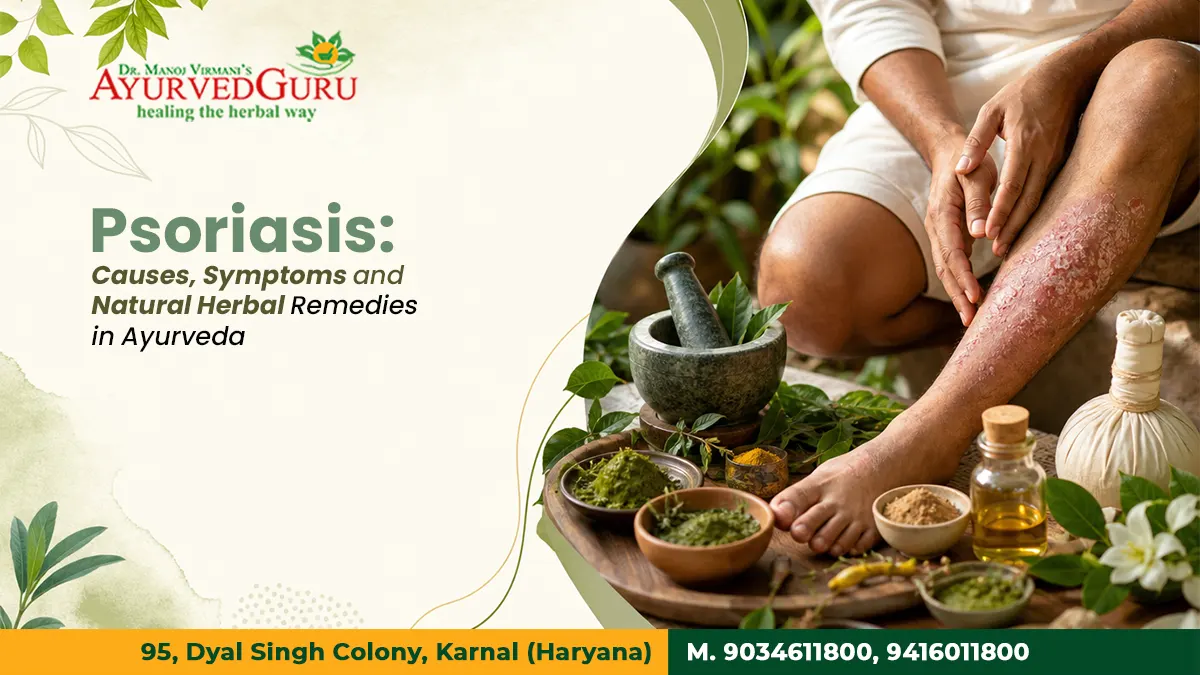
Psoriasis is a chronic skin condition characterized by dry, scaly, thickened and sometimes itchy patches on the skin. It often occurs on the elbows, knees, scalp and lower back, although other areas can be involved. The condition can be episodic, with periods of more pronounced symptoms and periods of relative improvement.
From an Ayurvedic perspective, skin health is directly related to the balance of Doshas, good digestion, good Agni (digestive fire) and the quality of Rakta Dhatu (blood tissue). Ayurveda believes skin disorders are caused by internal imbalances as well as diet, lifestyle and environmental factors.
What is Psoriasis in Ayurveda?
In the Ayurvedic literature, many skin disorders are described under the large umbrella of Kushtha, which may have similarities with conditions like psoriasis. The manifestation of a skin disease is understood through the participation of Doshas, Dhatus and body channels.
An imbalance of Vata and Pitta can be involved in psoriasis-type skin conditions, with Kapha contributing to heaviness, thickening or excess scaling in some individuals. Disturbed digestion and accumulation of Ama (metabolic waste from incomplete digestion) can also affect the internal environment of the body.
So, the Ayurvedic approach is not just confined to the skin. It supports digestion, balances the Doshas, maintains healthy elimination and promotes overall skin health.
Causes and Contributing Factors (Ayurveda)
In Ayurveda, there can be many reasons that can upset the balance of Doshas, which may contribute to skin problems. These include excessive consumption of spicy, sour, salty, oily or processed foods, Viruddha Ahara or incompatible food combinations, erratic eating habits and poor digestion. Excessive intake of dairy or heavy foods may also be unsuitable for some individuals.
Lack of sleep, an irregular daily routine, chronic stress, emotional strain, overexposure to environmental irritants, suppression of natural urges, a sedentary lifestyle and inadequate physical activity may also contribute to an imbalance.
Ayurveda especially emphasizes the relationship between digestion and skin health. Supporting Agni and reducing factors that promote Ama may therefore be an important part of a holistic strategy.
Symptoms of Psoriasis
Common symptoms of psoriasis may include dry, scaly patches of skin, thickened or raised patches, itching, irritation or discomfort, red or sore areas, silvery-white scales and dry, cracked skin. Symptoms may wax and wane, with periods of improvement followed by flare-ups.
Psoriasis can affect different people in different ways. Appropriate medical evaluation is important if symptoms are persistent, spreading, painful, infected or associated with joint swelling or stiffness.
Ayurvedic Herbal Treatment of Psoriasis
Ayurveda traditionally uses a number of herbs to maintain Dosha balance and promote skin health. Ideally, their use should be chosen according to an individual’s overall health, constitution and symptoms.
- Neem
- Manjistha
- Guduchi (Tinospora cordifolia)
- Turmeric (Curcuma longa)
- Aloe Vera
Neem (Azadirachta indica) is traditionally used in Ayurveda for its cleansing and skin-supportive properties. It is often part of Ayurvedic approaches for various skin concerns.
Neem leaves are used externally in traditional practices. For a mild neem leaf paste, clean, fresh leaves can be ground with a small amount of water and applied to a small area of unaffected skin first. If there is no irritation, it can be applied for a short time to suitable areas and then washed off gently.
Traditionally, Manjistha (Rubia cordifolia) has been used for supporting Rakta Dhatu and healthy skin. It is often used in classical Ayurvedic formulations intended for skin health.
Internal herbal preparations can vary widely in their dosage and suitability. Therefore, Manjistha is best taken under the guidance of a qualified Ayurvedic practitioner.
Guduchi (Tinospora cordifolia) is an important Ayurvedic herb traditionally used for supporting immunity, digestion and balanced Doshas. It is commonly found in Ayurvedic approaches to skin and inflammatory concerns because of its traditional properties.
Turmeric (Curcuma longa) is traditionally viewed as a cleansing and anti-inflammatory herb. It is commonly used in food and traditional Ayurvedic preparations.
A simple traditional preparation is turmeric milk, prepared by adding a small quantity of turmeric to warm milk. However, this may not be suitable for everyone, especially those who cannot tolerate dairy or have specific dietary restrictions.
Aloe vera (Aloe barbadensis) is used in traditional medicine to soothe and moisturize dry skin. Fresh aloe gel can be applied externally to suitable areas after testing for sensitivity on a small area of skin.
Aloe vera should not be applied to broken, bleeding or infected skin unless instructed to do so by a health professional.
Ayurveda Panchakarma for Psoriasis
Panchakarma is a specialized Ayurvedic therapeutic approach that aims to eliminate accumulated Doshas and restore balance. Certain skin conditions may be addressed with Virechana or other Panchakarma procedures depending upon the individual’s constitution and clinical evaluation.
Panchakarma should not be performed independently at home. It is important to be properly evaluated and supervised by a trained Ayurvedic doctor, especially if the person has other health disorders or is taking medication.
Nutrition and Lifestyle for Healthy Skin
In Ayurved Guru, considerable emphasis is given to Ahara (diet) and Vihara (lifestyle). A balanced routine may include freshly prepared and easily digestible foods, vegetables, whole grains and seasonal foods. Adequate water intake according to individual requirements and regular meal timings may also support overall wellbeing.
It may be helpful to limit excessively greasy, spicy and highly processed foods. Sufficient and consistent sleep, regular physical activity, yoga, meditation and other stress-management practices can also form part of a healthy lifestyle.
Avoiding known personal food or environmental triggers may be beneficial. Maintaining a simple food and symptom diary can also help identify individual patterns and potential triggers.
Abstract
Psoriasis demands a comprehensive strategy as it is influenced by many interconnected aspects of the body and skin health. In Ayurveda, skin disorders are viewed in terms of the balance of Vata, Pitta and Kapha and the state of Agni, Ama and Rakta Dhatu.
Neem, Manjistha, Guduchi, Turmeric and Aloe Vera are some of the traditional herbs that have been used to promote healthy skin and overall balance. Diet, digestion, sleep, stress management and daily routine are all important components of Ayurvedic care.
Ayurvedic principles may offer supportive approaches for those living with psoriasis, but persistent or severe symptoms should be evaluated by a qualified healthcare professional. Ayurvedic medicines and Panchakarma therapies should be undertaken under proper professional guidance rather than self-medicated.


