
.webp?v=639247041873369369)

 Friday , 18/09/2026 - 10:00
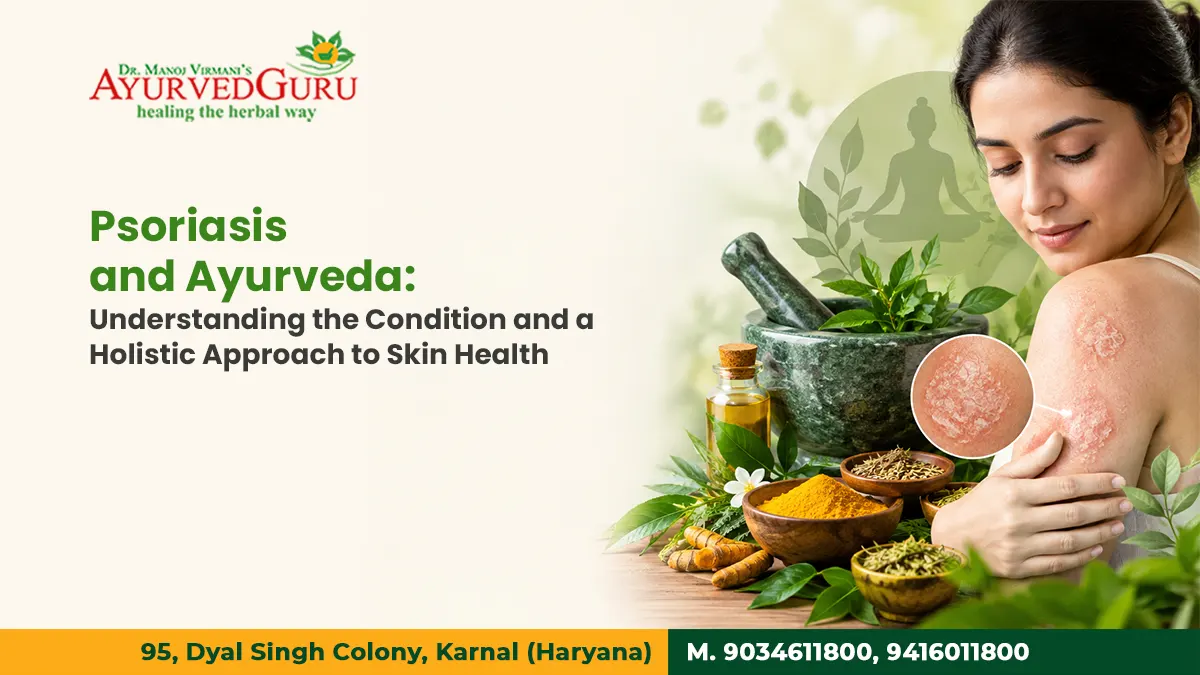
Psoriasis is more than a skin problem. For someone living with it, the condition can mean persistent itching, dryness, scaling, redness and the uncertainty of recurring flare-ups. It can affect the scalp, elbows, knees, hands, feet, nails and other parts of the body. Because the symptoms are visible, psoriasis can also affect confidence, social interactions and emotional wellbeing.
Psoriasis is a chronic inflammatory condition associated with an overactive immune response that causes skin cells to develop and accumulate more rapidly than usual. The result is often thickened, inflamed and scaly patches on the skin. Psoriasis is not contagious, but it can fluctuate over time, with periods of improvement followed by flare-ups.
For people who have struggled with recurring symptoms despite trying different approaches, Ayurveda offers a different way of looking at the condition. Rather than focusing only on what appears on the skin, Ayurvedic care considers the individual as a whole, including digestion, lifestyle, diet, stress, constitution and overall health.
What Causes Psoriasis?
There is no single cause of psoriasis. Genetic predisposition, immune-system activity and environmental factors can all play a role. Certain triggers may aggravate symptoms, including stress, infections, skin injury, smoking, alcohol and some medications.
Many people also notice that their psoriasis behaves differently at different stages of life. A flare-up may follow a period of stress, poor sleep, dietary changes or illness, while another person may have completely different triggers.
This is one reason psoriasis care cannot always follow a one-size-fits-all model. Understanding the individual's history and pattern of symptoms is an important part of developing an appropriate management plan.
What Does Ayurveda Say About Psoriasis?
Ayurveda approaches chronic skin disorders through the relationship between the body, mind, digestion, lifestyle and doshas. Psoriasis is commonly discussed within the Ayurvedic framework of Kushtha Roga, with conditions such as Kitibha described in classical Ayurvedic literature..
From an Ayurvedic perspective, an imbalance of doshas, impaired digestion, accumulation of Ama and unsuitable dietary or lifestyle habits may contribute to the manifestation or aggravation of skin disorders. Ayurvedic practitioners therefore look beyond the visible patch and assess the person's constitution, digestion, habits, stress levels and overall health.
This does not mean that every person with psoriasis has the same underlying pattern. In fact, individual variation is central to Ayurveda. Two people may have similar-looking plaques but require very different approaches based on their Prakriti and overall condition.
How Can Ayurveda Help in Psoriasis Management?
Ayurvedic psoriasis care generally focuses on creating a personalised plan rather than relying on a single remedy. Depending on the individual's condition, an Ayurvedic physician may consider dietary correction, lifestyle changes, herbal formulations, external applications and Panchakarma therapies.
At Ayurved Guru, the psoriasis programme describes personalised assessment based on factors such as Prakriti, symptoms, diet and lifestyle. The clinic also describes the use of Panchakarma, classical Ayurvedic medicines and dietary guidance as part of its approach to psoriasis care.
Panchakarma is a specialised area of Ayurveda and should not be approached as a generic detox programme that can be performed without professional assessment. The type, timing and suitability of any Panchakarma procedure need to be determined by a qualified Ayurvedic physician after considering the individual's health and condition.
Similarly, herbal medicines are not automatically suitable for everyone simply because they are natural. Their selection, dosage and duration should be guided by an appropriately qualified practitioner, particularly when a person is already taking other medicines.
Diet and Lifestyle Matter Too
Skin health is closely connected with everyday habits. While there is no universal psoriasis diet that works for every patient, maintaining a balanced eating pattern and identifying personal triggers can be useful components of long-term management.
Adequate hydration, regular physical activity, sufficient sleep and stress management may support overall wellbeing. Stress deserves particular attention because psychological stress is recognised as one factor that can trigger or worsen psoriasis in some people.
Ayurvedic care often places considerable emphasis on routine. Regular meals, appropriate sleep, mindful eating and reducing lifestyle factors that appear to aggravate symptoms can become part of a sustainable approach rather than a short-term intervention.
Can Psoriasis Be Completely Cured?
This is one of the most common questions people ask when searching for psoriasis treatment.
Psoriasis is considered a chronic condition, and its course can vary significantly between individuals. Periods of remission and flare-ups can occur. Therefore, patients should be cautious about claims of a guaranteed or permanent cure.
The more realistic objective is effective long-term management: reducing the frequency or severity of flare-ups, supporting healthier skin, identifying individual triggers and improving quality of life. Conventional dermatological treatment remains important for many patients, particularly those with moderate to severe disease or complications. Ayurvedic care may be considered as part of an individual's overall healthcare plan, but treatment decisions should be made with appropriate medical guidance.
Choosing the Right Ayurvedic Doctor for Psoriasis
Searching online for the Best psoriasis doctor Ayurveda India or Best psoriasis doctor in India Ayurveda can produce many names, but patients should look beyond marketing claims.
Experience with chronic skin disorders, appropriate Ayurvedic qualifications, personalised consultation, transparent communication and a willingness to understand the patient's complete history are important considerations. A responsible practitioner should also recognise when a patient needs evaluation or treatment from another medical specialist.
Psoriasis can sometimes be associated with nail changes or joint symptoms. Anyone experiencing persistent joint pain, stiffness or swelling alongside psoriasis should discuss these symptoms with a healthcare professional, as psoriasis can be associated with psoriatic arthritis.
Why Personalised Ayurvedic Care Is Important
One of the strengths of Ayurveda is its emphasis on individualisation. The same treatment is not necessarily appropriate for every patient simply because the diagnosis is the same.
A person with scalp psoriasis may have very different concerns from someone with extensive plaques on the body. Similarly, the lifestyle, dietary habits, stress levels and digestive health of one patient may be completely different from another.
At Ayurved Guru, the approach to psoriasis is centred on individual assessment and a combination of Ayurvedic therapies rather than treating the visible skin symptoms in isolation. The clinic describes its approach as incorporating Ayurvedic assessment, Panchakarma, classical formulations, dietary guidance and personalised care.
About Dr. Manoj Virmani of Ayurved Guru
Dr. Manoj Virmani is the Founder and Chief Ayurvedic Physician of Ayurved Guru, an Ayurveda and Panchakarma centre based in Karnal, Haryana. He completed his BAMS from Kurukshetra University and subsequently specialised in Panchakarma with an MD from Uttarakhand Ayurved University. He also holds an MD in Alternative Medicine from Sri Lanka and received Panchakarma training at Arya Vaidya Chikitsalyam & Research Institute in Coimbatore. He has more than 30 years of experience in clinical Ayurveda.
For patients exploring Ayurvedic options for chronic skin conditions, Dr. Virmani's work at Ayurved Guru focuses on personalised Ayurvedic assessment, Panchakarma, classical formulations and long-term patient care. Rather than viewing psoriasis simply as a surface-level skin concern, this approach considers the individual's constitution, lifestyle and broader health while developing a treatment plan.
Conclusion
Living with psoriasis can be frustrating, particularly when symptoms repeatedly return after periods of improvement. However, understanding the condition and approaching it with appropriate professional guidance can make long-term management more structured and less overwhelming.
Ayurveda offers a holistic framework that looks at the individual rather than treating every psoriasis patient in exactly the same way. Personalised diet and lifestyle guidance, appropriate Ayurvedic medicines, skin care and, where clinically suitable, Panchakarma may form part of an individualised treatment programme.
If you are considering Ayurvedic care for psoriasis, choose a qualified practitioner who takes time to understand your condition and provides realistic guidance rather than promising guaranteed results. With the right approach, the goal is not simply to respond to the next flare-up, but to develop a sustainable strategy for healthier skin and better overall wellbeing.


