
.webp?v=639247041873369369)

 Monday, 31/08/2026 - 11:10
Psoriasis can be difficult to explain to someone who has never experienced it. From the outside, it may look like a few dry or red patches on the skin. But for someone living with it, the itching, scaling, irritation and uncertainty about the next flare-up can become a constant source of discomfort.
It can affect confidence too. A person may think twice before wearing short sleeves, going swimming or even meeting people when a flare-up is particularly visible. And because psoriasis tends to come and go, it can be frustrating to feel that the skin is improving one week and becoming troublesome again the next.
Psoriasis is a chronic inflammatory skin condition. It develops when the immune system becomes overactive and speeds up the production of skin cells. The excess cells accumulate on the surface, resulting in the characteristic thick, dry and scaly patches associated with psoriasis.
The elbows, knees, scalp and lower back are common areas, but psoriasis can affect other parts of the body as well.
Why Does Psoriasis Happen?
There isn't one simple answer.
Genes can make a person more susceptible to psoriasis, while the immune system plays a major role in the development of the condition. Certain factors can then trigger or aggravate a flare-up.
Stress is a commonly reported trigger. Weather changes, infections, skin injuries, smoking, alcohol and some medications may also contribute in certain people. What triggers psoriasis in one person may have little effect on another.
This is why simply asking, “What should I stop eating?” or “Which cream should I use?” doesn't always provide the complete answer.
Understanding your own pattern can be much more useful. Paying attention to when flare-ups occur, what was happening in your life at the time and how your skin responds to different routines can provide valuable information to discuss with a healthcare professional.
And one important thing should always be made clear: psoriasis is not contagious. You cannot catch it by touching someone who has psoriasis.
What Does Psoriasis Look and Feel Like?
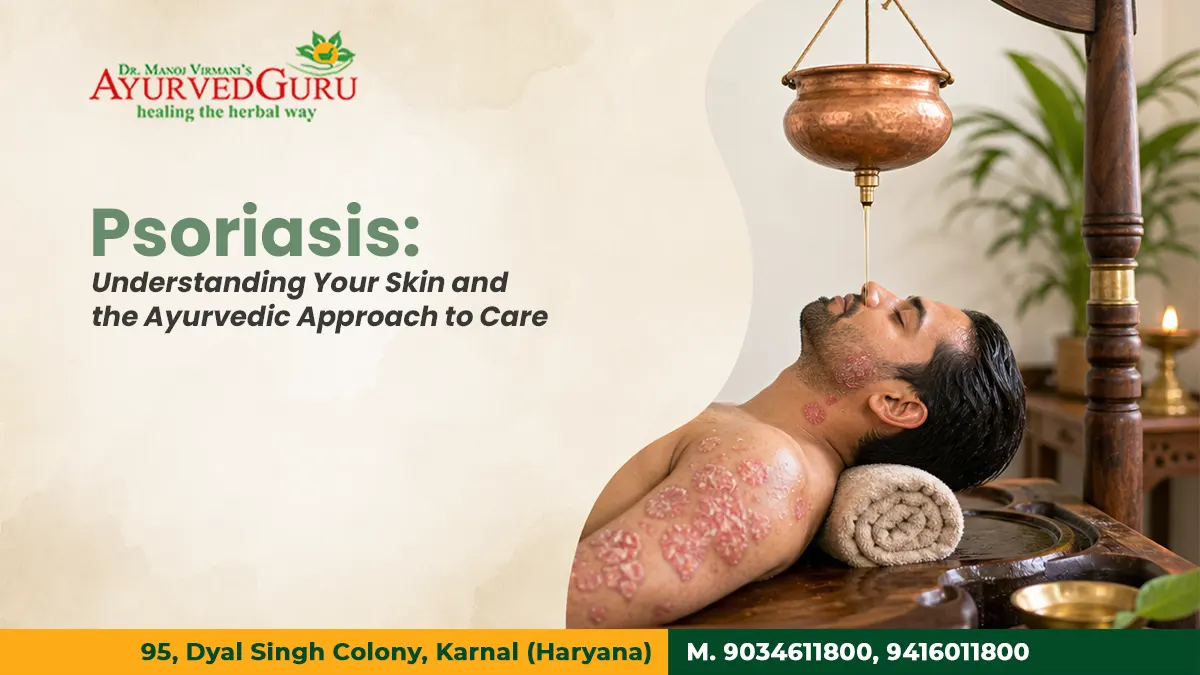
Plaque psoriasis is the most commonly recognised form. It usually produces raised, inflamed patches covered with dry, silvery scales. The affected areas may itch, sting or feel tight. When the skin becomes very dry, it may crack and bleed.
Psoriasis can also appear on the scalp and may sometimes be mistaken for severe dandruff. Nail psoriasis can cause pitting, discolouration or changes in the way the nails grow.
Some people also experience joint pain, stiffness or swelling. This can be associated with psoriatic arthritis and should not be ignored.
Because eczema, fungal infections and several other skin conditions can sometimes look similar, it is better to get a proper diagnosis rather than assuming every persistent patch is psoriasis.
Where Does Ayurveda Fit In?
Ayurveda looks at health from a broader perspective. Instead of looking only at what is happening on the surface of the skin, an Ayurvedic practitioner may also consider digestion, diet, lifestyle, stress, sleep, constitution and other aspects of an individual's health.
Within Ayurveda, chronic skin disorders are discussed under the broader concept of Kushtha. Traditional Ayurvedic assessment may also look at factors such as Prakriti and Dosha imbalance.
This does not mean that every person with psoriasis should receive the same Ayurvedic treatment. In fact, Ayurveda's emphasis on individual assessment is one of the reasons people interested in this approach often look for an experienced practitioner rather than simply buying an herbal product online.
Someone searching for the Best psoriasis doctor in India Ayurveda, for example, should look beyond a search result or a promising treatment claim. Qualifications, experience, the doctor's approach to assessment and the willingness to provide appropriate follow-up all matter.
What Can Ayurvedic Psoriasis Care Include?
There isn't a single Ayurvedic treatment that is suitable for everyone with psoriasis.
Depending on the person's condition and assessment, Ayurvedic care may include dietary changes, herbal medicines, external applications, lifestyle recommendations or therapies such as Panchakarma.
At a specialised Ayurvedic centre, treatment may also involve looking closely at digestion, stress and everyday habits rather than concentrating exclusively on the visible patches.
Diet can become an important part of this process. Rather than following a generic “psoriasis diet” found online, an Ayurvedic practitioner may recommend changes based on the individual's constitution, symptoms and overall health.
The same principle applies to herbal medicines. Natural does not automatically mean suitable for everyone. Herbal preparations can interact with medicines or may not be appropriate for people with certain health conditions. They should therefore be used under qualified guidance.
Panchakarma, when recommended, should also be undertaken under professional supervision rather than treated as a do-it-yourself detox.
Your Everyday Routine Matters Too
Treatment is only one part of living with psoriasis.
Something as simple as keeping the skin moisturised can make dry and uncomfortable skin easier to manage. Very hot showers, harsh soaps and aggressive scrubbing may irritate already sensitive skin.
Stress deserves attention as well. This doesn't mean that psoriasis is “all in your head.” It isn't. Psoriasis is a genuine inflammatory condition. However, stress can influence the body's immune and inflammatory responses and may worsen symptoms in some people.
A calmer and more consistent routine can therefore be helpful. Adequate sleep, regular movement, relaxation practices, yoga or breathing exercises may all have a place in an individual's overall approach to wellbeing.
It can also be useful to keep track of flare-ups. If your skin consistently worsens after a particular period of stress, illness, weather change or other exposure, that pattern is worth discussing with your doctor.
Finding the Right Ayurvedic Practitioner
If you're considering Ayurveda for psoriasis, don't choose a clinic solely because it appears when you search Psoriasis clinic near me Ayurveda.
Convenience is useful, especially when treatment requires repeated consultations or therapies, but experience and professional credentials are more important.
Look for a practitioner who takes time to understand your history rather than immediately prescribing the same treatment to everyone. A good consultation should leave you feeling that your symptoms, lifestyle and concerns have actually been heard.
It is also worth being cautious about anyone promising a guaranteed permanent cure. Psoriasis is a chronic condition and its course can vary considerably. An honest practitioner should be able to explain what treatment is intended to achieve and why a particular approach has been recommended.
Why Personalised Care Can Make a Difference
Two people can have psoriasis and yet have completely different experiences.
One person may mainly struggle with scalp psoriasis. Another may have plaques on the knees and elbows. Someone else may have frequent flare-ups during stressful periods. Their treatment plans may therefore need to look different too.
Ayurved Guru, an Ayurveda and Panchakarma centre in Karnal, takes a personalised approach to psoriasis care, with its current psoriasis programme describing assessment of Prakriti, diet, digestion, lifestyle and the individual's symptoms before developing a treatment plan.
This kind of individual attention can be particularly valuable when someone has been living with psoriasis for years and has already tried several approaches.
Conclusion
Psoriasis can be unpredictable, but living with it doesn't have to mean constantly feeling helpless about your skin. Understanding your triggers, looking after your skin, maintaining healthy routines and getting appropriate professional guidance can all form part of long-term management.
For people specifically interested in Ayurvedic care, Dr. Manoj Virmani is the Founder and Chief Ayurvedic Physician at Ayurvedguru in Karnal. He completed his BAMS from Kurukshetra University and later specialised in Panchakarma with an MD from Uttarakhand Ayurved University, with more than 30 years of experience in Ayurveda.
At Ayurvedguru psoriasis care is personalised, combining Ayurvedic assessment with approaches such as herbal medicines, dietary guidance and Panchakarma wherever found appropriate.
For someone considering this approach, consulting an experienced Ayurvedic physician can be a sensible first step. The goal should not simply be to chase clearer skin for a few weeks, but to understand the condition better and develop a sustainable way of caring for your skin and overall wellbeing.


