
.webp?v=639228232371791382)

 Monday, 24/08/2026 - 1:50
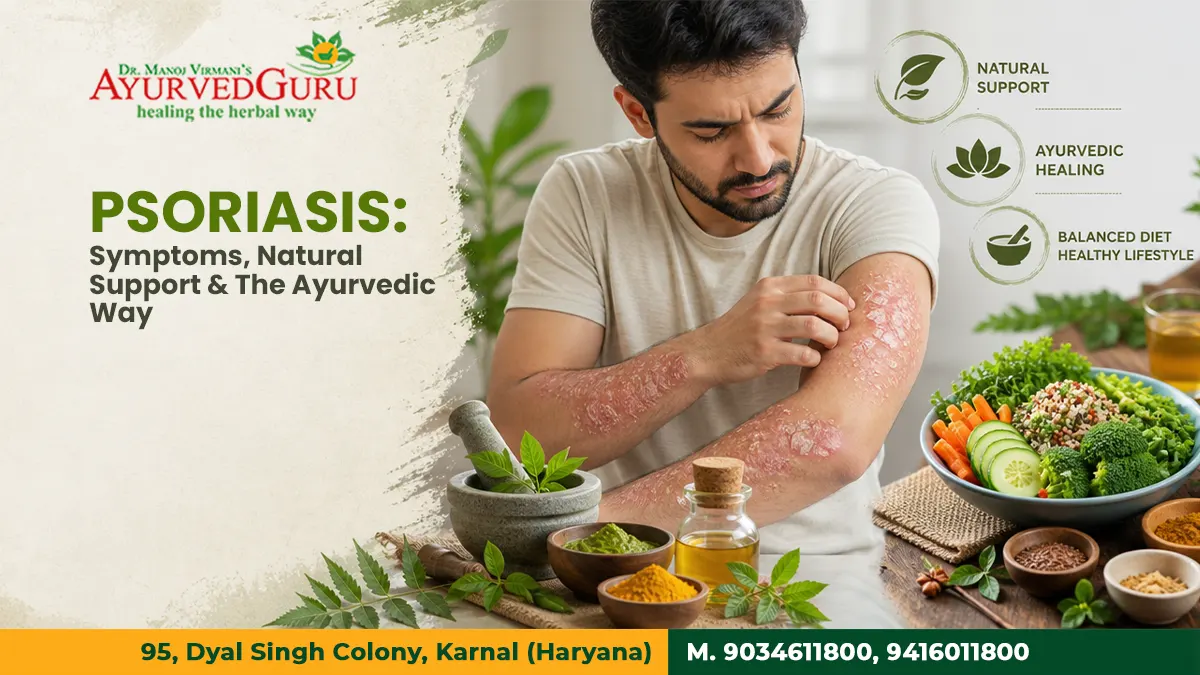
Psoriasis is not just a skin disorder. For those living with it, the ongoing itchiness, dryness, scaling and visible red patches can have a bearing on comfort, confidence and day-to-day life. It is a chronic inflammatory condition where skin cells are made much faster than normal, causing cells to build up on the surface of the skin and form thick, scaly patches. Plaque psoriasis is the most common type of psoriasis. It typically occurs on the elbows, knees, scalp and lower back, but psoriasis may appear almost anywhere on the body.
Psoriasis is recurrent and many people look for natural ways to help control flare-ups. That is when questions such as a Psoriasis itching home remedy, natural ways for red patches on skin natural cure, and Skin scaling disease treatment Ayurveda are frequently asked. Home care can help to keep the skin healthier and less painful, but psoriasis must be seen as a chronic condition, not something that can be cured by one remedy.
What is Psoriasis and Why Does it Occur?
In healthy skin, the cells naturally renew every few weeks. With psoriasis this process happens much faster. Increased production of skin cells leads to a build-up on the surface, forming raised plaques covered with scales. These patches can itch, become dry, cracked or sore.
The exact reason why someone develops psoriasis is complicated. Genetics also plays a role in susceptibility but immune system is also important. But a predisposition does not mean that symptoms will always be present.
A number of things can trigger or worsen a flare-up. Stress, skin injuries, infections, certain medications, smoking, alcohol and weather changes can affect different people in different ways. Gentle skin care is especially important as new psoriasis lesions can occasionally be triggered by minor irritation or injury to the skin.
What Psoriasis Looks and Feels Like
Depending on the type of psoriasis and the person's skin tone, it can look different. Plaque psoriasis typically consists of raised, well-demarcated areas of scale. On lighter skin, the patches may look red or pink and be covered with silvery-white scales. Psoriasis can look thicker on darker skin and the color can be brown or violet to darker shades rather than bright red.
Another common complaint is itching. For some, the itching is occasional and mild; for others, it can be constant and distracting. Scratching can further irritate the skin and can make existing patches worse or create new areas of irritation.
The nails and scalp can also be affected by psoriasis. The nails can get thicker, have pits or change color. Some people develop psoriatic arthritis which can cause joint pain, stiffness and swelling. Don’t overlook these symptoms as psoriasis is not limited to the visible skin.
How Do You Treat Psoriasis Itching at Home?
If the itching is uncomfortable, simple skin care measures can give you some relief. One home remedy often suggested for Psoriasis itching is to apply a cool, clean compress to the affected area for a short time. Keeping skin moisturized may also help reduce dryness which may make itching more manageable.
A lukewarm bath might be more comfortable than a very hot shower. Too harsh soaps, scrubbing too hard, or heavily scented products can irritate sensitive skin. It’s also better to pat the skin dry rather than rub it vigorously.
Most importantly, try not to scratch. Scratching can provide some relief but can damage the skin and might even worsen psoriasis. Dermatologists have specific measures they recommend to help control itching, and these include cool compresses and proper psoriasis treatment.
These steps should be considered supportive care, not as a substitute for professional treatment.
Home Remedy For Red Spots On Skin?
A frequent search is for red patches on skin natural cure especially when people want to avoid strong medicines. But red patches are not always psoriasis. Eczema, fungal infections, allergic reactions and a number of other skin conditions can cause similar symptoms.
That is why the first step is to find the cause. A dermatologist can diagnose psoriasis by examining the skin, scalp and nails, and discussing symptoms and medical history. Sometimes a small skin biopsy can be taken to confirm the diagnosis.
Once psoriasis is diagnosed, lifestyle and skin care measures can be included in treatment. Healthy everyday habits and avoiding known triggers, keeping the skin moisturized and protecting the skin from injury may help reduce discomfort and flare-ups.
There is no natural cure for psoriasis that has been proven to work for everyone, all the time. The evidence varies quite a bit between different herbs, supplements and therapies and complementary approaches are being researched. Some topical herbal products have shown promise in small studies but evidence for many complementary treatments is lacking, according to the National Center for Complementary and Integrative Health.
Learn Skin Scaling Disease Treatment Through Ayurveda
Ayurveda looks at skin health in relation to a person’s constitution, diet, lifestyle and internal balance. It is a general approach to health. This view is one reason many people look for Skin scaling disease treatment Ayurveda when they suffer from recurring dryness, scaling and irritation.
An Ayurvedic practitioner may assess a person’s symptoms, lifestyle and eating habits and other factors before creating a personalized approach. For some people, Ayurvedic care may include dietary advice, lifestyle changes, external applications and herbal preparations traditionally used.
But being “natural” doesn’t mean being risk-free. Some products have been found to contain potentially toxic levels of heavy metals such as lead, mercury or arsenic. Ayurvedic preparations can contain many ingredients. Hence, Ayurvedic medicines should be consumed under the supervision of a qualified practitioner and not self-prescribed.
Thus, Ayurveda can be seen as a complementary approach in the management of psoriasis especially when personalized care is aimed at overall wellbeing and skin comfort. Individuals who are currently receiving treatment from a dermatologist should also discuss complementary therapies with their health care professional instead of stopping prescribed medication themselves.
Treatments for Psoriasis
There is no one treatment for all people with psoriasis. Treatment depends on the type of psoriasis, severity, body areas involved, symptoms and the person’s overall health.
Mild psoriasis is often treated with topical therapies. Depending on the circumstances, these can include corticosteroids, vitamin D analogs, salicylic acid, retinoids or other prescribed medicines. Widespread psoriasis may need phototherapy or medicines that work throughout the body, such as biologic therapies.
It's not simply about making the patches look better. Proper treatment can help to reduce itching and scaling, improve the health of the skin and help prevent the condition from affecting daily life.
Also, if you have psoriasis with joint pain, swelling or stiffness that lasts for a long time, you should get medical advice, as these could be signs of psoriatic arthritis.
Daily Habits That Could Result in Healthier Skin
When dealing with psoriasis, consistency is often the name of the game instead of a quick fix. Incorporate gentle skin care into your daily routines. Avoiding unnecessary irritation can take away some of the stress on the skin and regular moisturizing can aid dryness.
Managing stress may also help, as emotional stress is a known trigger for some people. A well-rounded diet, regular physical activity and adequate sleep can help support general health, although no specific diet has been proven to be a cure-all for psoriasis.
Keeping a simple record of flares may also be useful. If symptoms continue to recur after a particular product, illness, stressful period, or environmental change, discussing the pattern with a healthcare professional may help identify personal triggers.
When to See a Specialist?
Persistent, spreading or severe skin patches are best evaluated by a professional rather than being treated at home. This is especially important if diagnosis is uncertain, symptoms interfere with sleep, the scalp or nails are involved, or there is joint pain in addition to skin symptoms.
Although psoriasis is a lifelong disease, that doesn’t mean people have to simply accept living with uncontrolled itching or scaling. Today, treatment can go a long way toward reducing symptoms, and supportive lifestyle and skin-care practices can help people manage their skin more comfortably.
Conclusion: A Personal Approach Can Help
Psoriasis is a disease that requires patience. Just because your skin looks good, doesn’t mean you are free from flares. Rather than searching for a quick remedy for red patches on skin natural cure or trusting only one Psoriasis itching home remedy it is better to learn about the disease, understand the individual triggers and develop a routine management.
For those interested in Ayurveda, a personalized approach to diet, lifestyle and traditional therapies can be explored with an experienced practitioner. For those interested in Ayurvedic support for psoriasis, Ayurved Guru can offer assistance, taking into account overall health and any current treatment requirements.
The most important thing is to be in care and know what you are doing. Whether someone chooses conventional treatment, Ayurvedic support or a combination under professional supervision, the goal should always be the same: calmer skin, better symptom control and a better quality of life.


