
.webp?v=639247041873369369)

 Mon, 24/07/2026 - 10:18
If you've ever dealt with psoriasis, you've probably heard plenty of well-meaning advice.
"Try this cream. Or "Change your soap." Or more than often words of reassurance like "It'll go away."
The reality is rarely that simple.
Psoriasis has a way of becoming part of your everyday life. Some mornings you wake up and your skin feels calm. A few stressful days later, the itching is back, the redness returns, and those familiar dry patches start showing up again. It's frustrating because the condition doesn't just affect your skin—it often affects how you feel about yourself too.
That's why more people today are looking beyond quick fixes. Instead of asking, "How do I hide it?" they're asking a different question: "How do I manage it better in the long run?"
What Exactly Is Psoriasis?
Psoriasis is a chronic autoimmune condition. In simple terms, your immune system becomes overactive and tells your skin to produce new cells much faster than it should. Normally, skin cells take several weeks to renew themselves. With psoriasis, this process can happen in just a few days.
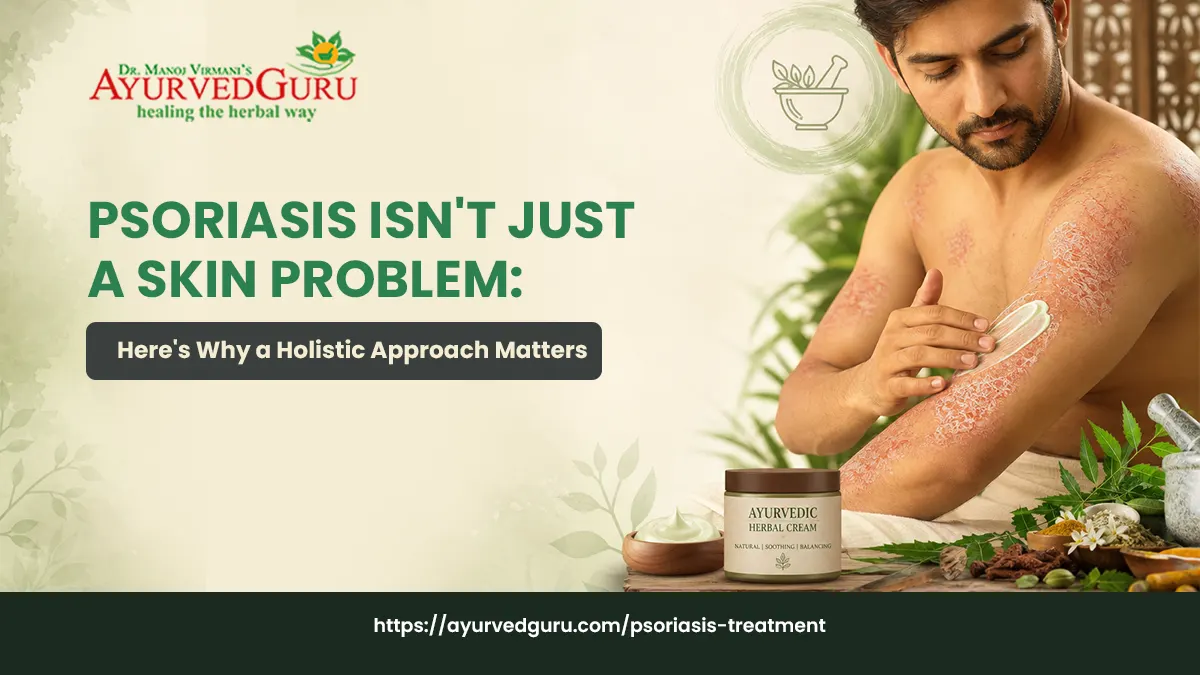
The result is a build-up of skin cells that forms thick, red, flaky patches. These usually appear on the elbows, knees, scalp, hands, or lower back, although they can develop almost anywhere.
One person's symptoms may stay mild for years, while another may experience frequent flare-ups that interfere with work, sleep, or daily comfort. That's one of the reasons psoriasis can be so difficult to treat—there's no universal pattern.
Why Does It Keep Coming Back?
This is one of the questions dermatologists hear most often.
Psoriasis isn't caused by poor hygiene or an allergy. It's linked to the immune system, genetics, and a range of environmental triggers. Stress is one of the biggest culprits, but infections, certain medications, smoking, alcohol, poor sleep, and even seasonal changes can also make symptoms worse.
The Limits of Treating Only the Symptoms
There's no denying that conventional treatments help many people. Steroid creams, medicated ointments, phototherapy, and prescription medicines can reduce inflammation and provide relief, particularly during severe flare-ups.
But for some patients, the relief is temporary.
It's common to hear people say that the patches disappeared while they were using the cream but returned soon after stopping it. Others become concerned about using topical steroids repeatedly over several years.
That growing concern has encouraged many people to explore Psoriasis treatment without steroids, especially if they're looking for a treatment plan that's designed for long-term management rather than short-term suppression.
This doesn't mean steroids are "bad." They have an important place in medical care. It simply means that many patients want additional options that support their skin health without depending solely on steroid-based medication.
Small Lifestyle Changes Can Make a Big Difference
One thing people often underestimate is how much everyday habits influence psoriasis.
Healthy skin starts with simple routines. Keeping the skin moisturized, avoiding harsh soaps, and protecting it from excessive dryness can reduce irritation significantly. Even something as simple as taking shorter, lukewarm showers instead of very hot ones can help preserve the skin's natural barrier.
Stress management deserves just as much attention.
Anyone living with psoriasis knows that stressful periods often seem to coincide with flare-ups. While reducing stress won't cure psoriasis, activities like yoga, walking, meditation, or simply getting enough sleep can help your body cope better, which may have a positive effect on your skin over time.
Food is another piece of the puzzle. There's no miracle diet that works for everyone, but many people notice improvements after eating fewer processed foods and adding more fresh vegetables, fruits, healthy fats, and whole grains to their meals. The goal isn't perfection—it's consistency.
Why More People Are Turning Towards Ayurveda
Across the country, interest in Psoriasis natural treatment India has grown steadily over the past few years.
Part of the reason is that Ayurveda looks at psoriasis from a broader perspective. Instead of focusing only on the visible patches, it considers digestion, metabolism, immunity, lifestyle, and overall body balance. The idea is that healthy skin often reflects what's happening inside the body.
Because every individual is different, Ayurvedic treatment is usually personalised. Two people with similar-looking psoriasis may receive completely different recommendations based on their body constitution, symptoms, medical history, and daily routine.
Treatment may include herbal formulations, dietary guidance, lifestyle modifications, and traditional Ayurvedic therapies. Rather than promising overnight results, the emphasis is on gradual improvement and supporting the body's natural healing process.
For many people, that approach feels more sustainable because it encourages long-term changes instead of relying on temporary symptom control.
Don't Ignore the Emotional Side
One part of psoriasis that doesn't get discussed enough is its emotional impact.
Visible skin conditions can affect confidence in subtle ways. Some people stop wearing certain clothes. Others avoid swimming pools or social gatherings. Even meeting new people can become stressful during a flare-up.
These feelings are more common than many realise.
Managing psoriasis isn't only about reducing redness or scaling. Feeling comfortable in your own skin again matters just as much. That's why a treatment plan should support both physical and emotional well-being.
Finding an Approach That Works for You
There's no single treatment that's perfect for everyone.
Some people respond well to conventional medicine. Others find that combining medical advice with healthier lifestyle choices and holistic care gives them better long-term results. The key is working with qualified healthcare professionals who understand your individual condition instead of following one-size-fits-all advice found online.
If you're exploring Psoriasis natural treatment in India or looking for Psoriasis treatment without steroids, it's worth consulting experienced Ayurvedic practitioners who focus on personalised care rather than generic solutions. Ayurved Guru, an Ayurveda clinic, follows this holistic philosophy by combining traditional Ayurvedic principles with customised treatment plans, dietary guidance, and lifestyle support. The goal isn't simply to calm a flare-up today but to help patients work towards healthier skin and better overall wellness over time.


